
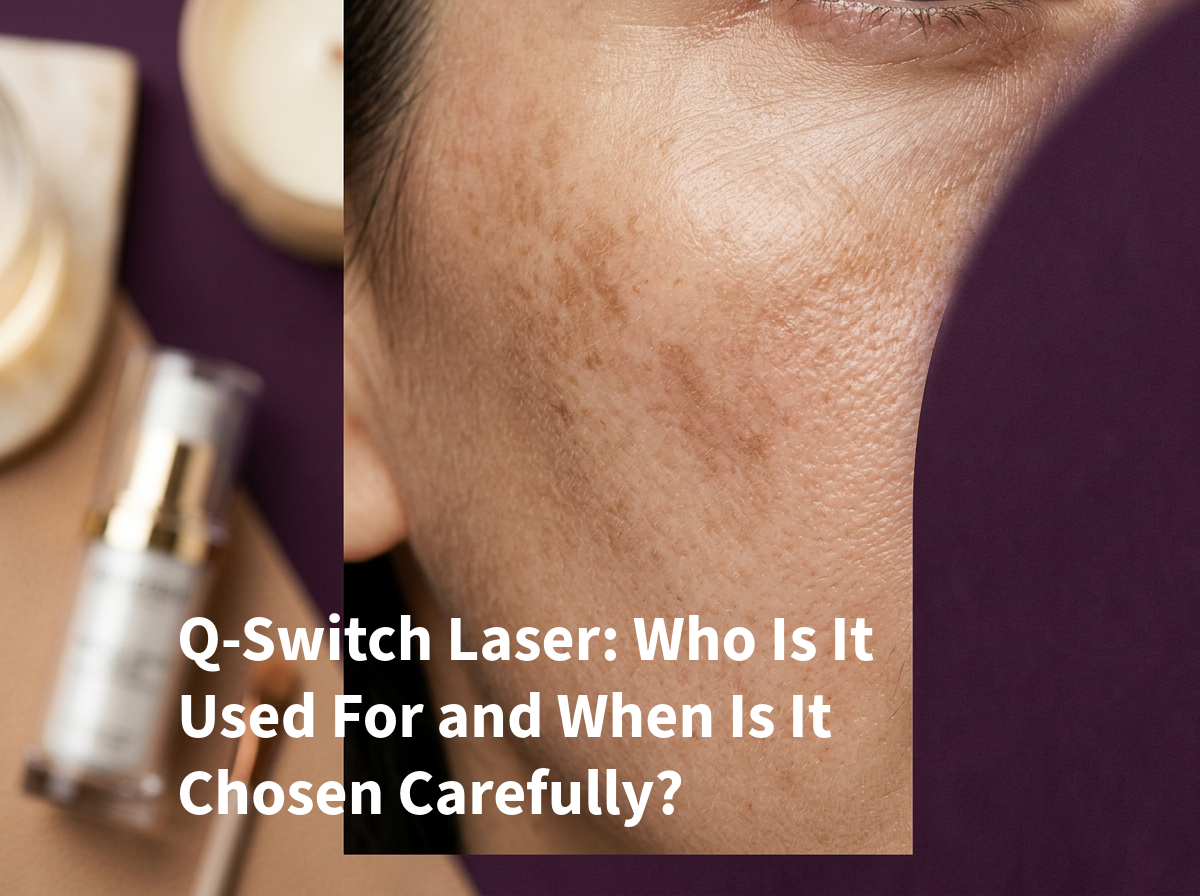
Q-Switch Laser: Who Is It Used For and When Is It Chosen Carefully?
Many people search for Q-Switch Laser after noticing facial pigmentation, dark spots, patchy uneven tone, tanning that does not settle properly, or marks that seem resistant to regular skincare. The interest is understandable. Laser sounds precise, modern, and targeted. But one important point is often missed:
not every pigmentation concern should automatically be treated with laser, and not every patient is suitable for the same laser pathway.
That is why the better question is not only, “Does Q-Switch Laser work?” The more useful question is:
Who is Q-Switch Laser actually used for, and when is it chosen carefully?
At Bare & Beauty Aesthetic and Wellness, this distinction already exists in the site architecture itself. The clinic has separate pages for Q-Switch Laser Treatment, Pigmentation & Discoloration Treatment, the broader Laser Treatments hub, and a dedicated Q-Switch Laser Technology page. This supports a more precise treatment conversation rather than a one-size-fits-all “laser for everything” approach.
Why people ask about Q-Switch Laser
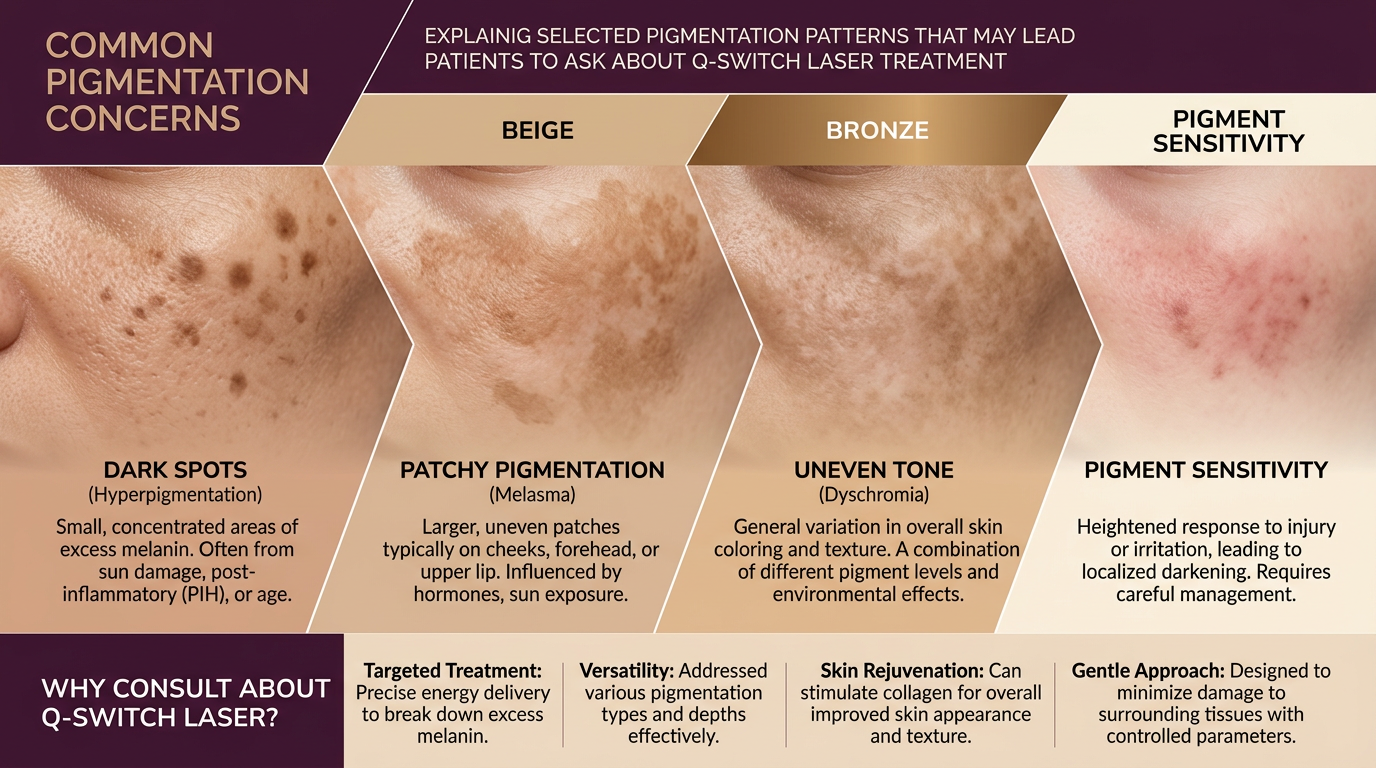
Q-Switch Laser often enters the conversation when people are dealing with:
- facial pigmentation
- dark spots
- uneven skin tone
- stubborn marks
- selected laser-based pigmentation treatment queries
- curiosity about whether laser may be more effective than random creams or facials
Many patients are not actually searching for technology. They are searching for a solution. They want to know:
- whether laser is suitable for their skin
- whether the concern is pigmentation or something else
- whether they are wasting time on the wrong treatment approach
- whether Q-Switch Laser may be relevant in Indian skin
This is exactly why a blog like this matters. It helps users move from generic curiosity to a more responsible consultation mindset.
What is Q-Switch Laser in simple patient language?
In simple terms, Q-Switch Laser is a laser technology that is discussed in selected pigmentation and skin-related treatment pathways. It is often associated with targeted laser use in cases where the doctor feels a laser-based approach may be appropriate after proper evaluation.
That does not mean:
- every mark needs Q-Switch
- every dark patch is laser-ready
- every pigmentation concern is the same
- every patient should choose laser over other options
Bare & Beauty’s treatment and technology inventory already lists Q-Switch Laser Treatment and Q-Switch Laser System, showing that it is part of the clinic’s laser and pigmentation ecosystem rather than a random standalone offering.
Who may be evaluated for Q-Switch Laser?
Q-Switch Laser may be discussed for selected patients when the concern appears suitable for laser-based pigmentation planning after consultation.
This may include selected cases involving:
- certain pigmentation concerns
- specific uneven tone patterns
- some superficial or targeted pigment-related treatment discussions
- cases where the doctor feels laser-based treatment may be appropriate within a broader pigmentation plan
The important word here is selected.
Q-Switch Laser should not be presented as a universal answer for all facial pigmentation, all dark patches, or all marks left after acne or inflammation.
Why it needs to be chosen carefully in Indian skin
This is where the discussion becomes especially important.
Indian skin may respond differently to irritation, heat, inflammation, and post-treatment changes. In selected individuals, pigment behaviour may be more reactive. That means a treatment choice that looks straightforward online may not be the safest first option for every case.
Care is needed because some patients may be more prone to:
- post-inflammatory darkening
- recurrent pigmentation
- mixed pigmentation patterns
- irritation-related worsening
- melasma-like behaviour
- uneven recovery if treatment is not chosen carefully
This does not mean laser is unsafe by default. It means selection matters.
That is why Bare & Beauty’s clinical content should always frame treatment through evaluation, suitability, and medical judgement rather than quick promotional claims. That approach is also consistent with the clinic’s no-guarantee and consultation-led policy system.
When Q-Switch Laser should be chosen carefully
Q-Switch Laser deserves extra caution in situations where:
- the pigmentation type is not clearly understood
- melasma may be involved
- the skin becomes easily irritated
- past peels, creams, or procedures have triggered worsening
- pigmentation keeps returning
- the patient has been self-treating aggressively
- the goal is unrealistic or based only on social media expectations
This is where many people go wrong. They assume that “laser for pigmentation” is one simple category. But in real clinical practice, the treatment decision depends on what the pigmentation actually is and how the skin behaves.
What may a doctor evaluate before recommending Q-Switch Laser?
A responsible clinic should not recommend Q-Switch Laser only because a patient asks for it.
Before choosing a laser-based plan, a doctor may assess:
- the type of pigmentation
- how long it has been present
- whether it is recurring or recent
- whether it appears melasma-like, post-inflammatory, tanning-related, or mixed
- treatment history
- prior use of creams, peels, or laser
- skin sensitivity
- tendency to darken after irritation
- current sun and heat exposure pattern
- whether the patient’s expectations are realistic
This is where Bare & Beauty’s content system becomes commercially powerful in the right way. Instead of sounding sales-driven, the clinic sounds thoughtful, evaluation-led, and protocol-based. The AI workflow explicitly requires that service content remain medically toned, consultation-led, and structured around suitability, risk, and FAQs rather than hype.
What habits and lifestyle issues may keep pigmentation active?
Procedures are only one part of pigmentation management. In many cases, habits and routine issues may keep the concern active or make results less stable.
Relevant factors may include:
- poor sunscreen compliance
- frequent sun exposure
- heat exposure
- friction or rubbing
- random use of strong active ingredients
- over-exfoliation
- poor routine consistency
- steroid-containing creams used without proper guidance
- poor aftercare after peels or procedures
- unrealistic expectation that one treatment alone will solve everything
This is one reason why patients sometimes feel that “nothing works,” when in reality the skin is being repeatedly triggered.
Q-Switch Laser and pigmentation treatment are not the same conversation
This distinction matters for SEO and for patient trust.
A person searching for Pigmentation & Discoloration Treatment may need:
- diagnosis
- topical care guidance
- peel-based discussion
- trigger correction
- melasma-aware planning
- or selected laser discussion
A person searching for Q-Switch Laser Treatment is often already closer to a procedure-focused mindset.
That is why the blog should naturally reinforce both pages but keep them separate in meaning:
- Pigmentation & Discoloration Treatment = broader treatment category
- Q-Switch Laser Treatment = selected procedural pathway within appropriate cases
This mirrors the Bare & Beauty architecture correctly and prevents content cannibalisation.
How to know whether Q-Switch Laser may be worth discussing
This section is written to support HowTo schema safely, because it guides the patient decision path without teaching any self-treatment.
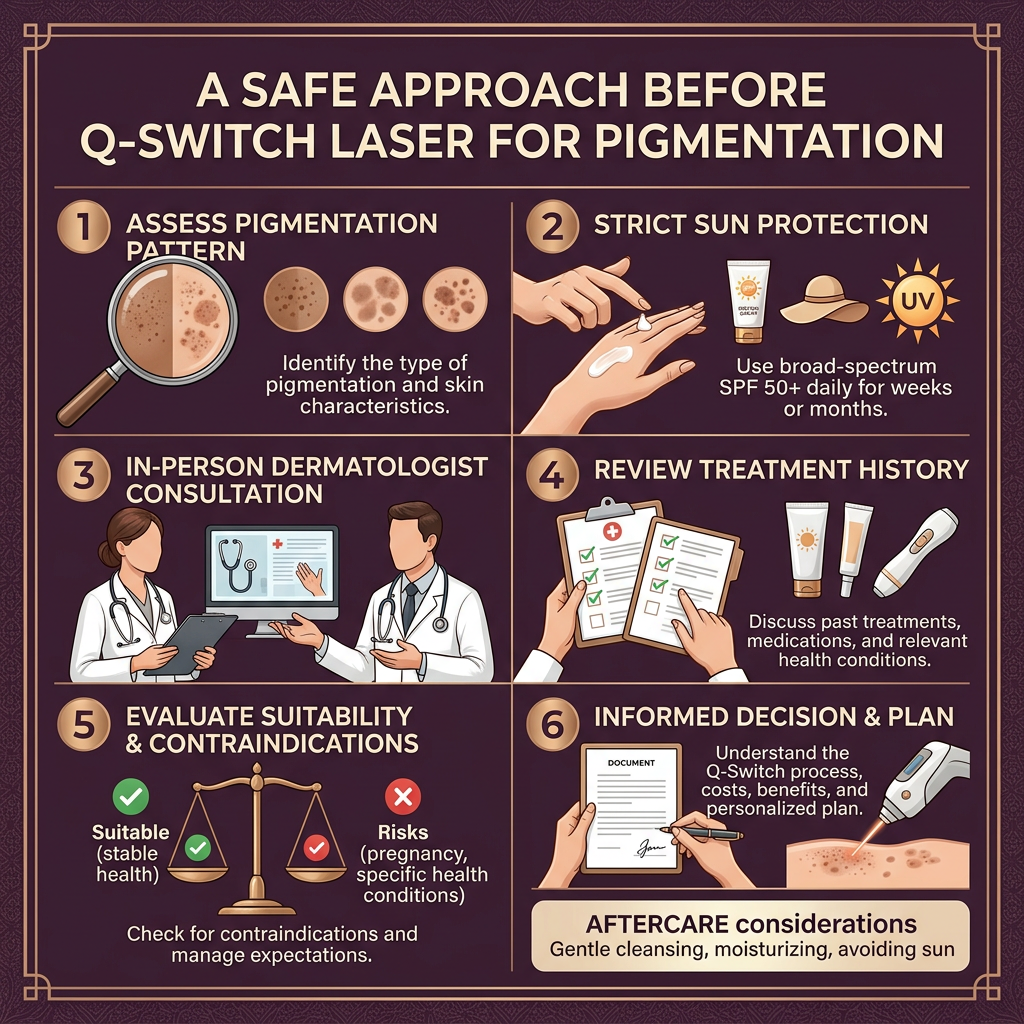
Step 1: Notice whether the pigmentation is recent or recurring
Recurring pigmentation often needs a different treatment conversation than a recent isolated mark.
Step 2: Do not assume every mark needs laser
A dark patch, uneven tone, or stubborn mark may not automatically mean Q-Switch Laser is the right next step.
Step 3: Protect the skin from sun and irritation
Before and during pigmentation planning, consistent sun protection and reduced irritation are often important.
Step 4: Seek in-person evaluation
Consultation can help determine whether the concern appears laser-suitable, melasma-like, post-inflammatory, or mixed.
Step 5: Review your past treatment history honestly
Previous creams, facials, peels, or laser sessions matter and should be discussed clearly during consultation.
Step 6: Ask whether the pigmentation type is actually suitable for Q-Switch Laser
Technology should follow diagnosis, not the other way around.
Step 7: Follow aftercare carefully if treatment is advised
Pigmentation management often depends on consistency, aftercare, and maintenance rather than one isolated procedure.
When should you seek Q-Switch Laser consultation in Noida?
You may consider consultation for Q-Switch Laser treatment in Noida if:
- pigmentation is not settling with routine care
- dark patches keep returning
- you are unsure whether the concern is melasma, tanning, or another pigment issue
- you are considering laser and want to know whether it is suitable for your skin
- prior self-treatment has not helped
- you want a more structured, clinic-led treatment plan
This is where local and commercial search intent becomes stronger. People who search:
- q switch laser treatment in noida
- q switch laser for pigmentation
- laser for dark spots on face
- pigmentation laser treatment noida
often want more than generic skincare advice. They want to know whether the laser conversation is relevant to them.
Final word
Q-Switch Laser may be used for selected pigmentation-related concerns, but it should be chosen carefully and not treated as a universal answer for every dark patch or uneven tone problem.
The most responsible path is to understand:
- what type of pigmentation is present
- whether the skin is reactive
- whether melasma or recurrence is involved
- whether laser is actually appropriate
- what triggers and habits also need correction
At Bare & Beauty Aesthetic and Wellness, the right decision about Q-Switch Laser Treatment should begin with in-person consultation and suitability review, not assumptions. This protects outcomes, trust, and long-term treatment logic while keeping the clinic positioned exactly as it should be: ethical, system-driven, and patient-first.
FAQs
1. Who is Q-Switch Laser used for?
Q-Switch Laser may be discussed for selected patients with certain pigmentation-related concerns after in-person consultation and suitability assessment.
2. Is Q-Switch Laser suitable for all pigmentation?
No. Not every pigmentation concern should be treated the same way, and not every case is suitable for the same laser pathway.
3. Can Q-Switch Laser be used in Indian skin?
It may be discussed in selected cases, but Indian skin often needs more careful treatment planning because pigment behaviour can be more reactive in some people.
4. What does a doctor evaluate before recommending Q-Switch Laser?
The doctor may review the pigmentation type, recurrence pattern, skin sensitivity, treatment history, sun exposure, and whether the concern appears suitable for laser treatment.
5. Is melasma treated the same way as other pigmentation?
Not always. Melasma often needs a more cautious and recurrence-aware treatment conversation than many other pigmentation concerns.
6. Can habits and sun exposure affect pigmentation treatment?
Yes. Poor sunscreen use, heat exposure, friction, random actives, and poor aftercare may all make pigmentation harder to manage.
7. When should I seek Q-Switch Laser consultation in Noida?
If pigmentation is recurring, resistant to routine care, or you are considering laser and want to know whether it is appropriate for your skin, consultation is advisable.