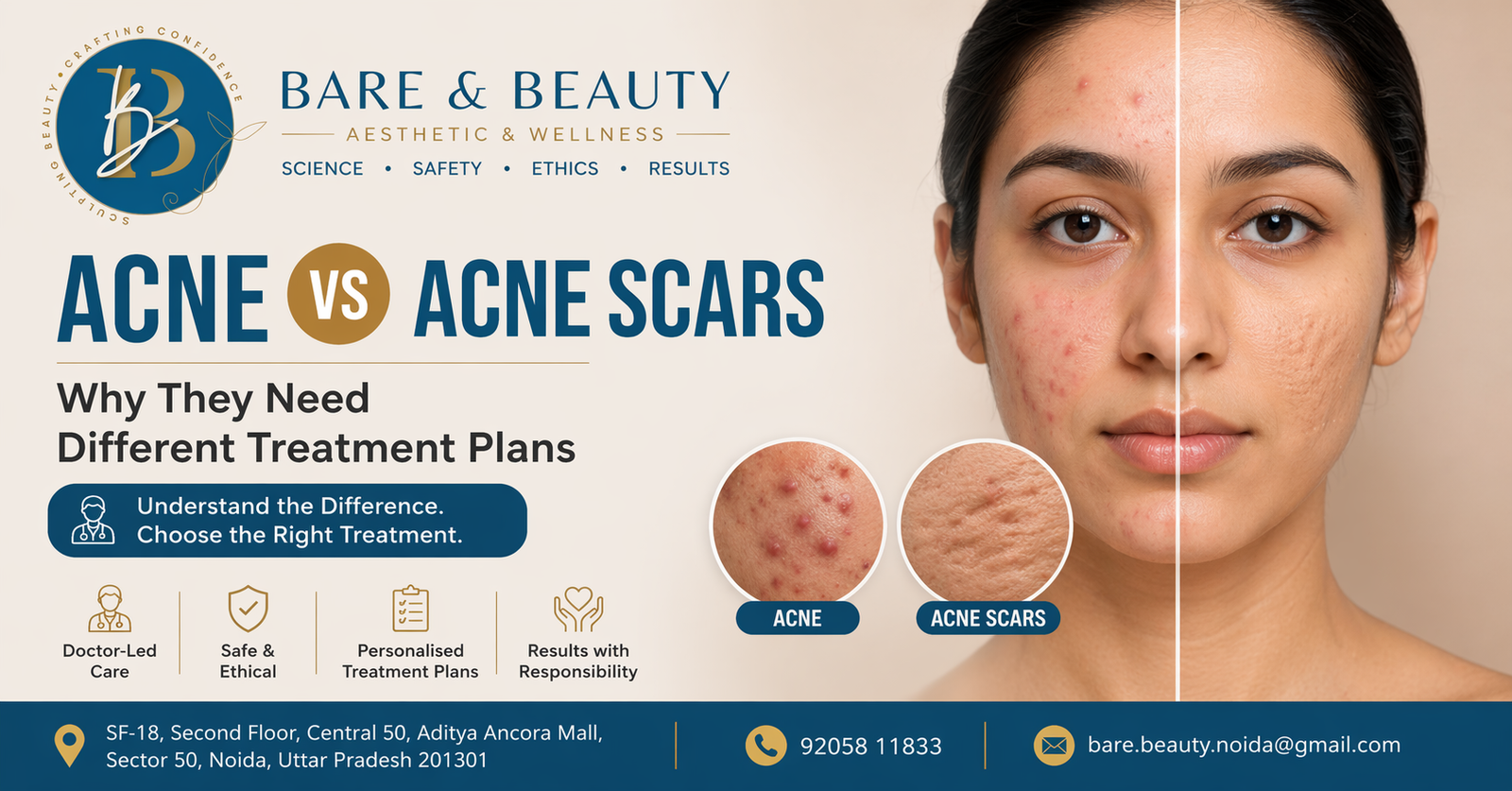
Acne vs Acne Scars: Why They Need Different Treatment Plans
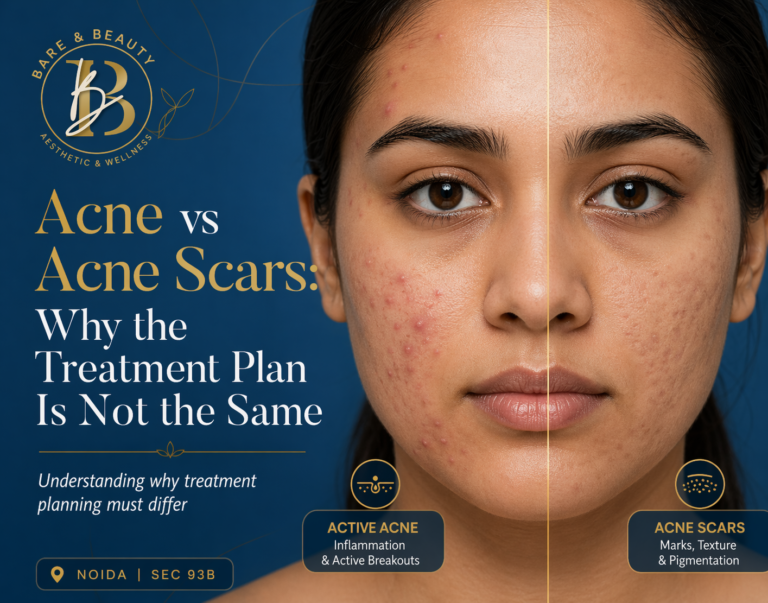
Acne and acne scars are often spoken about as if they are the same problem. In reality, they are different conditions and usually need different treatment approaches.
This distinction matters. Many people continue using acne creams when the active acne has already settled and what remains is textural scarring or post-inflammatory marks. Others focus only on scar treatments while still having frequent breakouts, which can make the skin cycle continue.
At Bare & Beauty Aesthetic and Wellness, Noida, treatment planning is guided by skin examination, acne severity, scar type, skin sensitivity, and the patient’s overall goals. That is why understanding the difference between acne and acne scars is an important first step.
What is acne?
Acne is an active skin condition. It commonly appears as:
- whiteheads
- blackheads
- papules
- pustules
- painful inflamed bumps
- recurrent breakouts on the face, jawline, chest, back, or shoulders
Acne may develop due to a combination of factors such as excess oil production, clogged pores, inflammation, bacterial activity, hormonal influence, and individual skin tendency.
In simple terms, acne is the ongoing disease process.
When acne is still active, the priority is usually to reduce new breakouts, calm inflammation, support skin recovery, and lower the risk of future marks or scars.
What are acne scars?
Acne scars are the changes left behind after acne lesions heal. They are not active pimples. Instead, they are the after-effects of earlier inflammation.
Acne scars may look like:
- depressions or pits in the skin
- uneven skin texture
- rolling or box-like indentations
- small deep scars
- skin that looks smooth from a distance but uneven in side lighting
Some people also confuse acne scars with post-acne marks. Not every mark after acne is a scar.
Post-acne marks are not always the same as scars
After acne settles, many people notice red, brown, or dark marks. These may be due to post-inflammatory changes in the skin, especially in Indian skin types where pigmentation can persist longer.
These marks may improve differently from true textural scars.
That is why a proper assessment matters:
- active acne needs acne control
- pigmented post-acne marks need a different skin recovery plan
- true acne scars may need texture-focused procedures
Why acne and acne scars need different treatment plans
The biggest reason is simple: the skin problem is different.
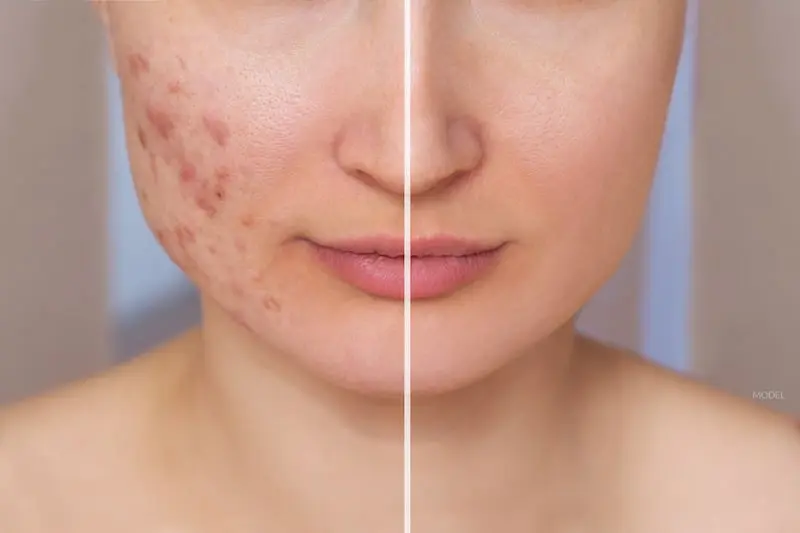
1. Acne treatment focuses on controlling active disease
When acne is active, treatment usually aims to:
- reduce breakouts
- control inflammation
- support skin barrier balance
- prevent worsening of marks and scars
- reduce recurrence where possible
2. Acne scar treatment focuses on improving texture and residual changes
Once acne is largely controlled, the treatment focus may shift to:
- scar type assessment
- texture improvement
- skin remodeling procedures
- gradual improvement through planned sessions
- realistic expectation setting
Trying to treat scars while acne is still actively flaring may not always be the first priority. If new breakouts continue, new marks and new scars can keep forming.
Common mistake: treating all post-acne skin changes the same way
One of the most common mistakes is assuming that all acne-related skin changes can be handled with one cream, one facial, or one “skin polishing” approach.
In practice, acne-related concerns often fall into different categories:
| Skin concern | What it usually means | Planning priority |
|---|---|---|
| Active pimples and inflammation | Ongoing acne activity | Acne control |
| Brown or red marks after acne | Post-inflammatory marks | Recovery and pigmentation-focused support |
| Pits, depressions, uneven texture | Acne scarring | Scar-focused procedures |
A person may also have more than one category at the same time. For example, active acne plus older scars, or acne plus pigmentation.
That is why treatment planning should be individualised rather than generic.
Signs you may need acne treatment rather than scar treatment
You may need active acne management if you are noticing:
- fresh pimples appearing regularly
- painful inflamed acne
- recurring clogged pores
- oily, acne-prone skin with repeated flare-ups
- skin irritation from self-treatment
- worsening breakouts around periods, stress, or lifestyle changes
In such cases, the first goal is often to calm active acne before focusing on scar correction.
Signs you may need acne scar treatment evaluation
You may need evaluation for acne scar treatment if:
- breakouts are now much less frequent
- the main concern is uneven texture
- makeup settles into pits or depressions
- side lighting makes the skin texture look irregular
- old acne sites remain visibly indented
- you feel the acne has healed but the skin surface has not returned to baseline
This is where scar-focused planning becomes more relevant.
Why early acne control matters
Acne is not only a cosmetic concern for many people. Repeated inflammation can increase the chance of lingering marks and long-term textural change.
Early and appropriate treatment may help:
- reduce the intensity of active flare-ups
- limit unnecessary picking and skin trauma
- reduce the chance of deeper inflammatory damage
- improve skin recovery over time
This does not mean every person with acne will develop scars. It means that delayed or inappropriate management can sometimes increase the risk.
Acne scars are not all the same
Not all acne scars behave the same way. Some are shallow, some are deep, some are broad and rolling, and some are sharply defined.
Because of this, acne scar treatment is rarely a one-size-fits-all decision.
Clinical planning may depend on:
- scar pattern
- depth and severity
- skin type
- ongoing acne activity
- history of sensitivity or pigmentation tendency
- tolerance for downtime
- patient expectations and timeline
That is also why a scar treatment plan may involve staged care rather than a single procedure.
Treatment planning at Bare & Beauty
Bare & Beauty offers consultation-based skin care and procedural planning for concerns related to acne, post-acne changes, and acne scars as part of its skin treatment services. The clinic’s skin treatment and acne scar treatment structure is part of the broader Bare & Beauty treatment system, which includes dedicated service pages for Acne Treatment, Acne Scar Treatment, and the Skin Treatments hub.
Depending on the individual case, planning may involve:
- evaluation of active acne severity
- understanding whether the issue is acne, marks, scars, or a combination
- deciding whether the first priority is inflammation control or texture work
- setting realistic expectations
- advising session-based or progressive care where appropriate
All treatments are consultation-based, require in-person assessment, and are done with informed consent. Bare & Beauty also clearly states that treatment suitability and outcomes vary by individual and are not guaranteed.
Why self-diagnosis can delay improvement
Online advice can be helpful for awareness, but acne and acne scars are frequently misidentified.
A person may think:
- dark marks are scars
- active inflammation is “just skin sensitivity”
- all scars need the same procedure
- ongoing acne can be ignored while focusing on resurfacing
This confusion can delay the right treatment path.
A professional skin consultation helps separate:
- active acne
- post-acne pigmentation or marks
- true acne scarring
- mixed presentations
That clarity often makes treatment decisions more realistic and more efficient.
Contact Acne Experts now and Book Consultation
Don’t ignore the problem and rush to us to get rid of the root cause now!
When should you seek professional help?
Consider an in-clinic acne evaluation if:
- breakouts are recurring or painful
- over-the-counter products are not helping
- acne is leaving marks or texture changes
- you are unsure whether the concern is acne or scarring
- the condition is affecting confidence, grooming, or daily comfort
- you want a medically guided plan instead of repeated trial and error
Final word
Acne and acne scars may look connected, but they are not the same condition and should not automatically be treated the same way.
If acne is active, the first priority is usually acne control. If the breakouts have settled but texture remains uneven, acne scar evaluation may become the next step. If dark marks are the main issue, post-acne pigmentation support may be more relevant.
The most useful treatment plan starts with identifying what the skin is actually dealing with.
If you are unsure whether your concern is active acne, post-acne marks, or acne scars, a consultation-based assessment at Bare & Beauty, Noida can help you understand the next step more clearly.
Are acne marks and acne scars the same thing?
No. Acne marks are often colour changes left after inflammation, while acne scars usually refer to textural changes such as pits or uneven skin surface.
Can active acne and acne scars happen together?
Yes. Some people have ongoing breakouts along with older scars from previous acne episodes. In such cases, treatment planning usually needs to be prioritised carefully.
Should acne be treated before acne scars?
In many cases, yes. If acne is still active, controlling new breakouts is often important before focusing mainly on scar correction.
Do all acne scars need the same procedure?
No. Acne scars vary in depth, pattern, and severity. Treatment planning depends on scar type, skin condition, and individual suitability.
When should I consult a clinic for acne or acne scars?
You should consider consultation if acne is recurring, painful, leaving marks, causing uneven texture, or not responding to routine skin care.