Can Scalp Health Affect Hair Fall? Why Evaluation Matters Before Choosing Hair Treatment
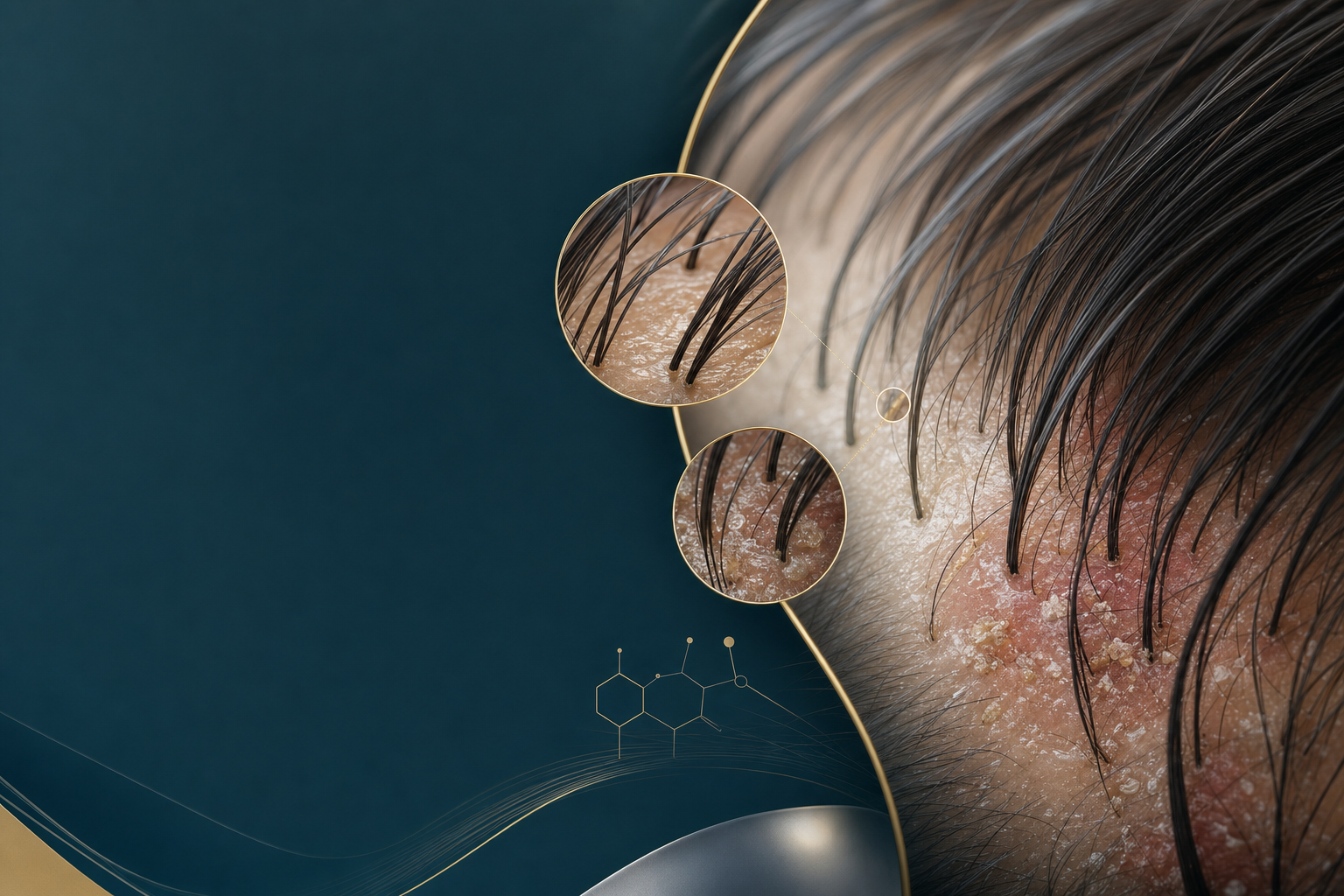
Hair fall is often discussed only in terms of regrowth treatments, injections, serums, or supplements. But in many cases, one important part of the conversation gets overlooked: the scalp itself.
A healthy scalp does not automatically guarantee that hair fall will stop, and an unhealthy scalp is not the cause behind every case of thinning. Still, scalp condition can influence how the hair environment behaves, how comfortable the scalp feels, how much buildup or irritation is present, and how a doctor plans the next step in treatment.
This is why it is useful to think of hair fall in a more complete way. Instead of asking only, “Which treatment should I take?”, the better question is often, “What is happening to my scalp and hair, and what does that mean for treatment planning?”
At Bare & Beauty Aesthetic and Wellness, the hair treatment cluster already includes Hydrafacial Keravive, PRP for Hair Loss, GFC Therapy, and the broader Hair Treatments hub, which makes this blog an important bridge between symptom awareness and treatment suitability. The clinic’s published framework also makes clear that treatments are consultation-based, in-person, and must not be presented with guarantee-style language.
What does scalp health actually mean?
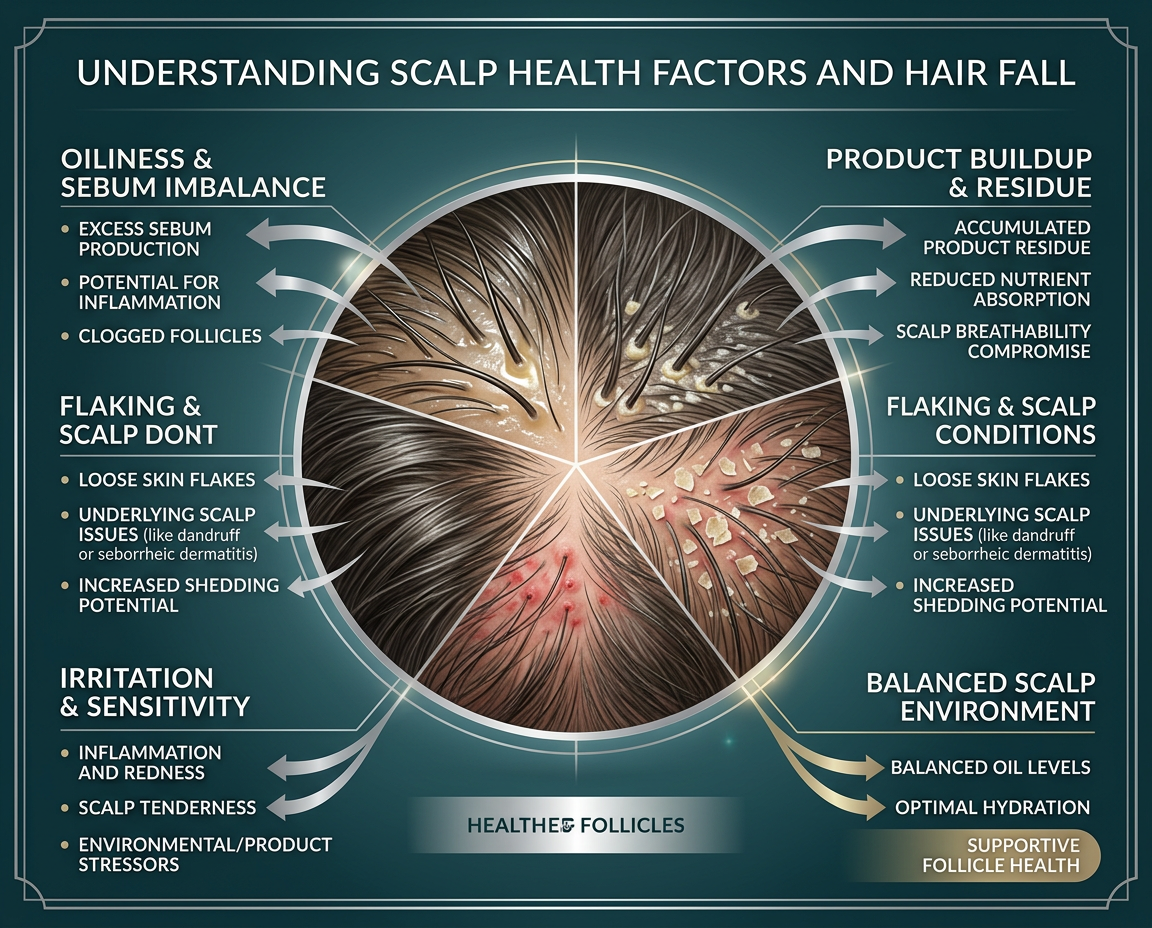
When people hear the phrase “scalp health,” they often reduce it to dandruff or oiliness. In reality, scalp health is broader than that.
It can include:
- excess oil or heaviness
- product buildup
- flaking
- dryness
- itching
- sensitivity
- poor scalp hygiene
- inflammation or irritation
- general imbalance of the scalp environment
A scalp does not have to look severely diseased to still need attention. Even mild but persistent issues such as buildup, itching, stickiness, or irritation can affect comfort, confidence, and hair-care compliance.
This is especially relevant because many people start hair treatments while ignoring the condition of the scalp itself.
Can poor scalp health contribute to hair fall or make it worse?
In some cases, yes. Poor scalp health may not be the root cause of hair fall, but it can contribute to an environment in which shedding, discomfort, or poor treatment response becomes more noticeable.
Examples include:
- persistent buildup around the scalp
- excessive oiliness that is not being managed properly
- scratching caused by itch or irritation
- inflamed or neglected scalp condition
- irregular scalp cleansing habits
- product overload that leaves the scalp congested
A scalp that feels unhealthy does not automatically mean permanent hair loss is happening. But it can make the situation more difficult to interpret, and in some people it may aggravate an already existing hair concern.
That is why scalp health should not be ignored in a hair-fall consultation.
When hair fall is not only about the scalp
This is a very important distinction.
Not every person with hair fall has a scalp-first problem. Hair fall may also be linked to:
- pattern hair thinning
- nutritional factors
- stress-related shedding
- hormonal influences
- post-illness shedding
- postpartum changes
- medical history and medication patterns
- mixed causes
This is exactly why a premium clinic should not recommend every patient the same treatment. A person may complain of hair fall, but the underlying pattern may be very different from one case to another.
Some people mainly need scalp support.
Some may need a broader hair-loss workup.
Some may eventually be guided toward regenerative hair treatments.
Some may need habit correction first.
What may a doctor evaluate before suggesting hair treatment?
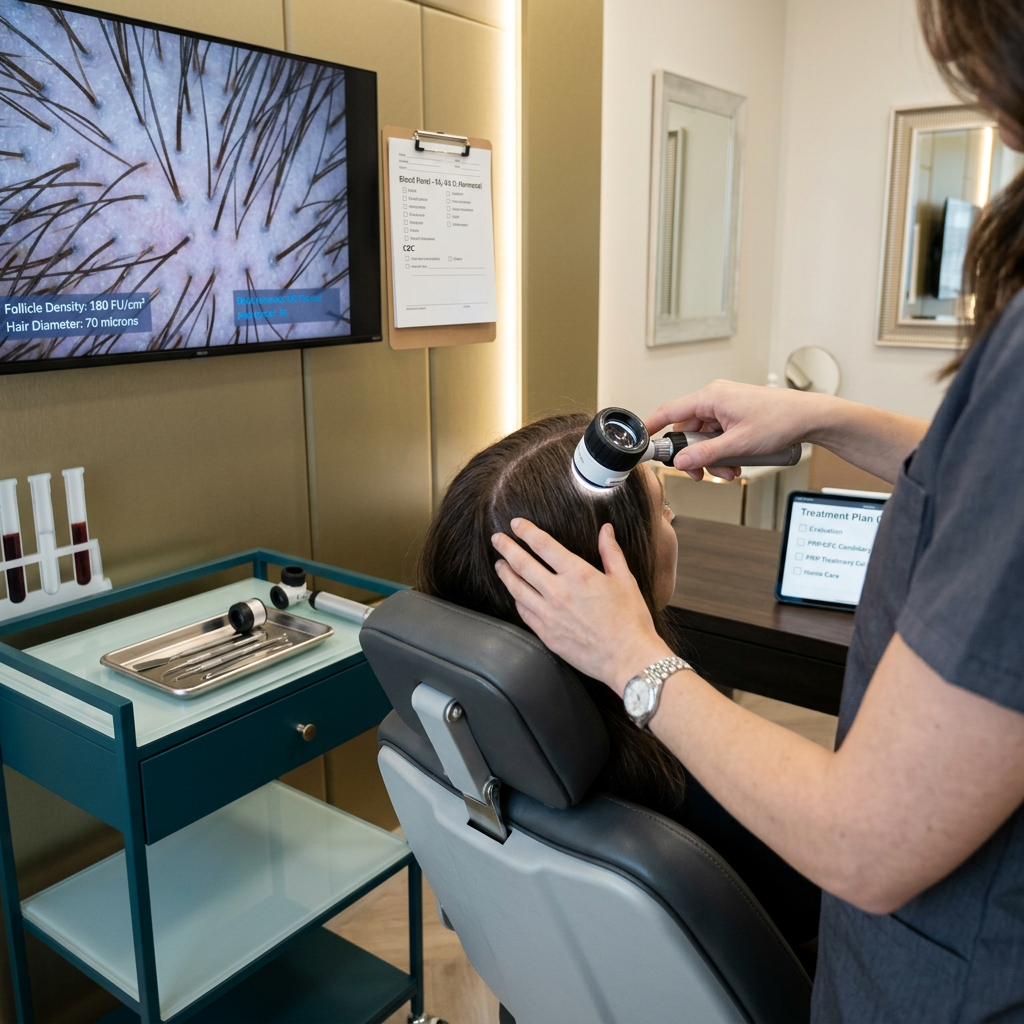
Before discussing whether a person may be suitable for a scalp-support procedure or regenerative hair treatment, a doctor may first assess the pattern more carefully.
This evaluation may include:
- whether the issue is shedding, thinning, or both
- how long the problem has been present
- whether the scalp feels oily, itchy, flaky, dry, or uncomfortable
- whether there is visible buildup or irritation
- family history of hair thinning
- recent illness, stress, or major life changes
- postpartum or hormonal history where relevant
- current medications
- previous hair treatments or self-treatment attempts
- scalp sensitivity and hair-care practices
- whether density loss is diffuse or patterned
This kind of evaluation matters because treatment should follow diagnosis logic, not trend logic. Bare & Beauty’s published content and policy structure clearly supports consultation-based medical judgement, informed consent, and personalised treatment planning rather than one-size-fits-all claims.
What tests may be advised in selected cases before planning hair treatment?
Not every person with hair fall needs blood tests. At the same time, not every hair problem should be approached only by looking at the scalp surface.
Depending on the history, examination, and suspected cause, a doctor may sometimes advise selected tests or medical review before planning treatment. These may vary from patient to patient.
In selected cases, doctors may consider evaluation such as:
- CBC
- ferritin or iron-related assessment
- vitamin B12
- vitamin D
- thyroid profile
- blood sugar or HbA1c where relevant
- selected hormonal evaluation where clinically indicated
These are not universal requirements for every patient. The purpose of such testing, where advised, is to understand whether internal contributors are playing a role in the shedding or thinning pattern.
This kind of cause-based assessment can improve both treatment planning and expectation setting.
What habits and lifestyle factors may also need correction?
Hair treatment should not be framed only as a clinic procedure. In many patients, everyday habits may also be worsening the problem or slowing improvement.
Possible contributing factors may include:
- poor or irregular sleep
- high stress load
- crash dieting or low-protein intake
- poor scalp hygiene
- excessive use of harsh styling products
- frequent heat exposure
- very tight hairstyles
- poor compliance with medical advice
- scratching or rubbing the scalp
- changing products too frequently without understanding the cause
Some of these may seem minor, but together they can influence scalp comfort, hair quality, and treatment outcomes.
This is also why realistic planning matters. Bare & Beauty’s policy documents make clear that outcomes vary from person to person and may be affected by lifestyle, biological response, and patient compliance.
Where does Hydrafacial Keravive fit into the conversation?
Hydrafacial Keravive should not be positioned as a universal answer for all hair fall. A better and more clinically responsible way to describe it is as a scalp health therapy that may be discussed when scalp support, scalp cleansing, or scalp-environment optimisation becomes relevant to the patient’s overall care plan.
Bare & Beauty’s treatment inventory already lists Hydrafacial Keravive specifically under hair and scalp therapies, which makes it an important support page for this topic.
In practical terms, a treatment like Keravive may be relevant when the conversation includes:
- scalp buildup
- scalp maintenance
- supportive scalp care
- preparation of the scalp environment
- integration into a broader hair-care strategy
That does not mean every case of hair fall needs Keravive. It means some people may benefit from addressing scalp health as part of a more structured plan.
When PRP or GFC may also enter the discussion
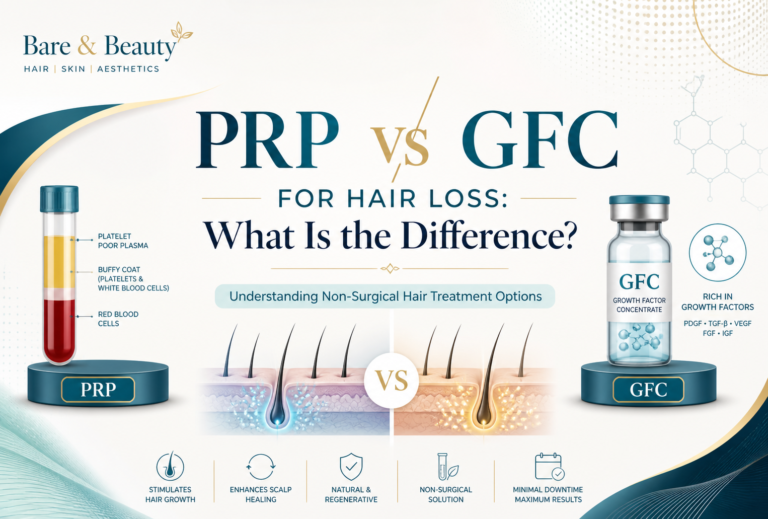
If the problem goes beyond scalp comfort or scalp buildup and starts pointing toward thinning, density reduction, or a more established hair-loss pattern, the doctor may also discuss regenerative-support approaches such as PRP for Hair Loss or GFC Therapy.
Bare & Beauty already offers both PRP for Hair Loss and GFC Therapy as separate service areas within the hair cluster.
This is important because:
- scalp therapy and regenerative therapy are not the same thing
- some patients may need scalp support first
- some may be guided toward PRP or GFC after evaluation
- some may need a combination or staged plan
- some may need investigation before either is advised
This is exactly why the consultation should guide the treatment — not the other way around.
How to approach hair fall more responsibly
This section can also support HowTo schema in a compliant way because it focuses on patient guidance, not self-treatment.
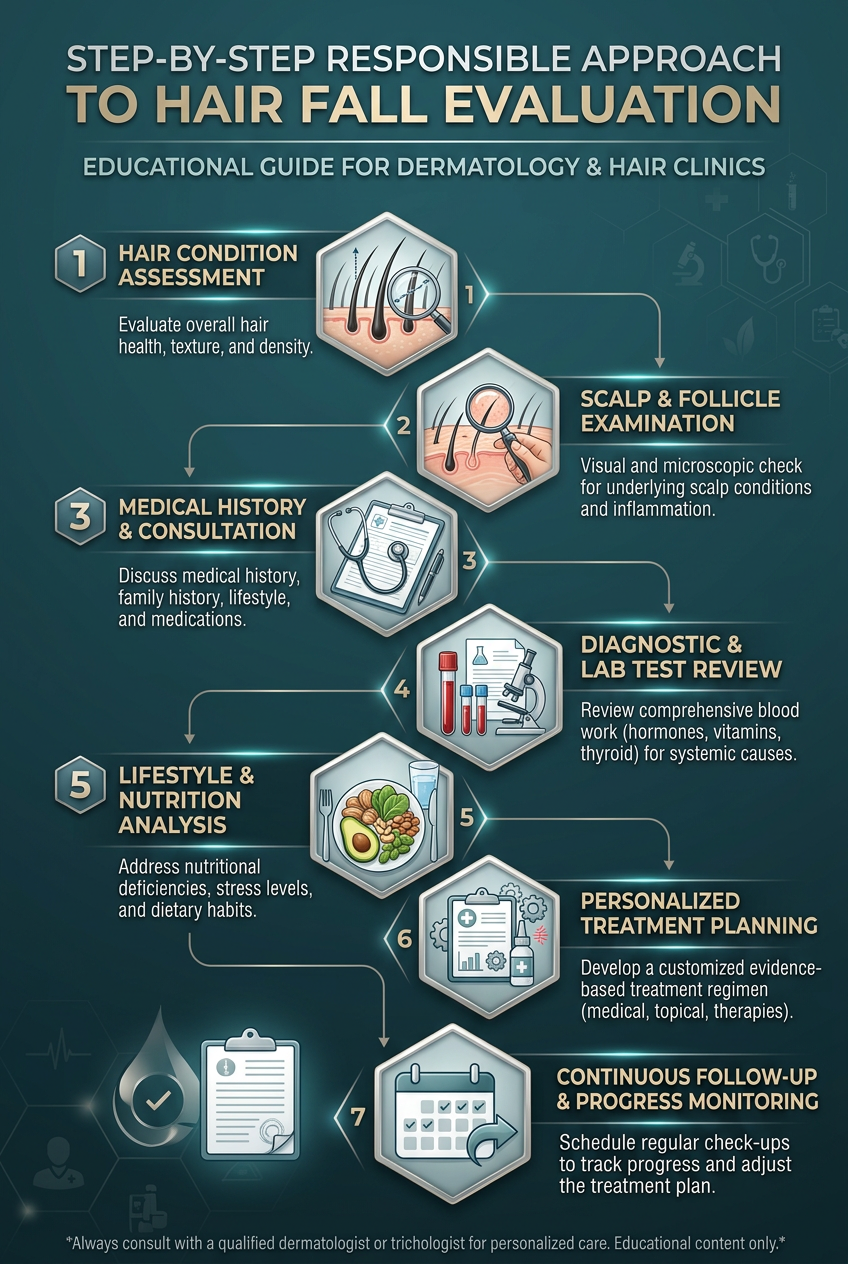
Step 1: Notice the pattern, not just the number of strands
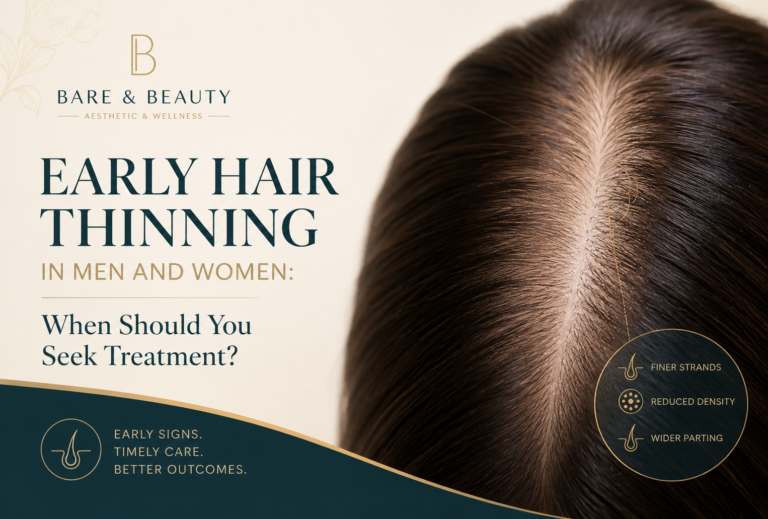
A few strands during washing or combing do not tell the full story. Pay attention to whether the issue is sudden shedding, reduced density, widening parting, scalp discomfort, or gradual thinning.
Step 2: Observe whether the scalp is also uncomfortable
If the scalp feels oily, itchy, flaky, heavy, irritated, or congested, that information matters and should be discussed during consultation.
Step 3: Avoid starting random treatments too early
Do not assume every hair-fall issue needs the same serum, injection, or supplement. Treatment should be based on the suspected cause.
Step 4: Seek an in-person scalp and hair evaluation
A consultation may help identify whether the problem appears scalp-related, thinning-related, stress-related, nutritional, or mixed.
Step 5: Do recommended tests if the doctor advises them
Selected blood tests or medical review may sometimes help clarify the cause and improve treatment planning.
Step 6: Correct habits that may be aggravating the issue
Sleep, stress, food quality, scalp hygiene, and harsh hair practices may all influence the situation.
Step 7: Follow a staged treatment plan rather than chasing one quick fix
Some people may need scalp therapy. Others may be guided toward PRP, GFC, or another approach. Many cases improve when the plan is built step by step.
When should you seek professional help for hair fall?
You should consider consultation if:
- hair shedding has become persistent
- scalp discomfort keeps recurring
- hair density seems reduced over time
- parting or crown visibility is increasing
- scalp feels unhealthy despite home care
- you are unsure whether the issue is scalp-related or deeper
- you want to know whether Hydrafacial Keravive, PRP, or GFC may even be relevant in your case
This is where the blog can naturally capture higher-intent search behaviour such as:
- hair fall treatment in Noida
- scalp treatment for hair fall
- PRP or GFC for thinning hair
- Hydrafacial Keravive in Noida
- doctor consultation for hair fall
Final word
Yes, scalp health can affect hair fall in some people. But it is not the whole story in every case.
That is why the smarter approach is not to jump straight to a treatment name. The smarter approach is to understand:
- what the scalp is doing
- what the hair pattern suggests
- whether internal causes need attention
- whether lifestyle correction is needed
- and whether scalp-support or regenerative therapy should even be considered
At Bare & Beauty Aesthetic and Wellness, the right next step for hair fall should begin with in-person evaluation, not assumptions. Treatments such as Hydrafacial Keravive, PRP for Hair Loss, or GFC Therapy may be discussed only after suitability is assessed, because responsible hair treatment planning should always follow medical judgement and informed consent.
FAQs
1. Can scalp health affect hair fall?
Yes, in some cases scalp health can influence shedding, discomfort, buildup, and overall treatment planning. However, not all hair fall is caused by scalp issues alone.
2. Does every person with hair fall need scalp treatment?
No. Some people may need scalp-focused care, while others may have thinning related to pattern hair loss, stress, nutritional factors, or other causes.
3. What is Hydrafacial Keravive used for?
Hydrafacial Keravive is discussed as a scalp health therapy and may be considered in selected cases where scalp support and scalp-environment optimisation are relevant.
4. Do all hair-fall cases need PRP or GFC?
No. PRP and GFC are not suitable or necessary for every person with hair fall. Suitability depends on consultation, scalp examination, history, and treatment goals.
5. What tests may a doctor advise before planning hair treatment?
Depending on the case, a doctor may sometimes advise selected tests such as CBC, ferritin, vitamin B12, vitamin D, thyroid profile, blood sugar, or other relevant evaluations.
6. Can poor sleep and stress worsen hair fall?
Yes, lifestyle factors such as poor sleep, high stress, crash dieting, and poor scalp-care habits may contribute to worsening hair concerns in some people.
7. When should I seek hair fall treatment in Noida?
If hair shedding is persistent, density seems reduced, scalp discomfort keeps recurring, or you are unsure whether you need scalp therapy or hair treatment, a consultation is worth considering.